MiniMax pushed Hailuo 2.3 this week with pricing identical to Hailuo 02 but measurable improvements in physical action realism, character micro-expressions, and stylization stability across the clip. Output stays at 1080p at 24fps, and the company is claiming a new global record for video model cost-efficiency. If Hailuo is already in your pipeline, this is a zero-cost upgrade — just switch versions and run.
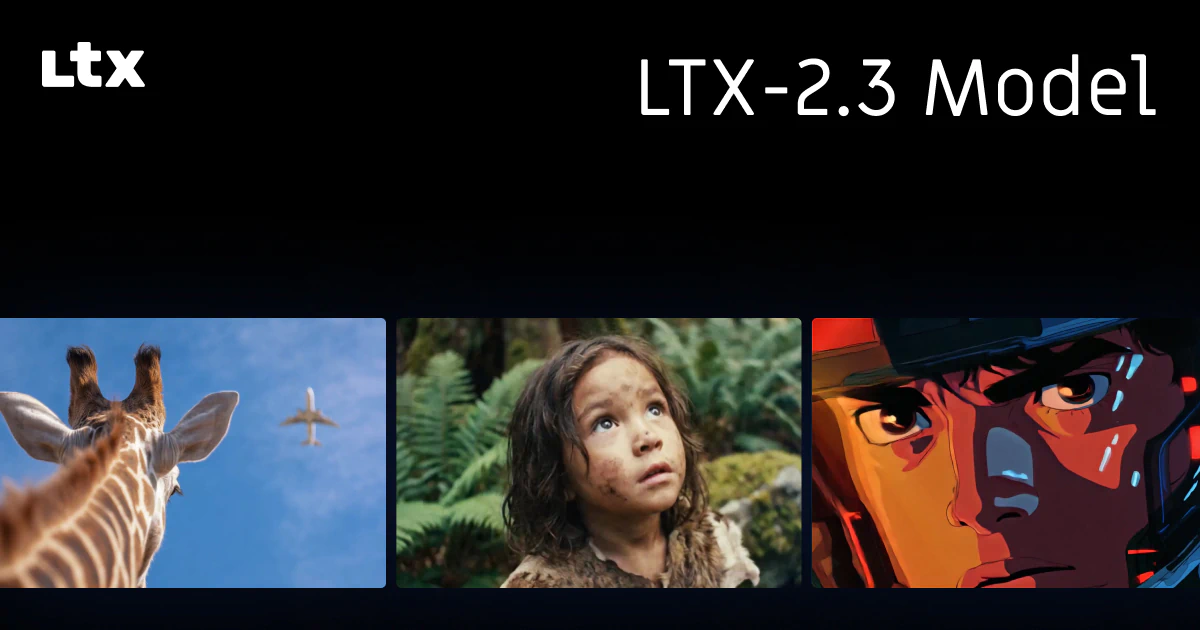
Lightricks' LTX-2.3 arrives with 22 billion parameters, full ComfyUI custom nodes, and free weights on HuggingFace including a quantized fp8 variant for lower-VRAM machines. Native 9:16 portrait mode, multi-stage latent upscaling, and improved audio-to-video integration make this the most capable free-to-run open-source model for Reels and Shorts production right now.
Kuaishou's Kling 3.0 — with 15-second clips, multilingual native audio, and significantly stronger character consistency — is now reachable via ComfyUI nodes. The headliner is the multi-shot storyboard feature: specify duration, shot size, camera movement, and narrative content per shot before the model generates. That's directing, not just prompting.
Pika 2.5 ships scene extension to 25 seconds, Pikaframes keyframe interpolation, and a full timeline and layer editor that transforms Pika from a one-clip generator into a compact motion design application. Camera direction is now a first-class prompt input, temporal consistency is dramatically tightened, and the character-face flicker that plagued earlier versions is essentially gone.
TikTok's C2PA-powered detection has already tagged 1.3 billion AI-generated videos and currently identifies synthetic content from 47 different AI tools with 94.7% accuracy on synthetic faces and 87.3% on AI-generated backgrounds. Creators who skip self-disclosure face automated labeling, reduced distribution, or removal — and the rules differ materially from Instagram and YouTube, so platform-specific compliance is now non-negotiable.
Shorts' share of total YouTube creator earnings climbed from 11% in 2025 to 18% in 2026, but RPM on Shorts remains $0.03–$0.08 per thousand views versus $3–$20 for long-form in the same niche — a gap of up to 60x. The playbook that's actually working: Shorts as a high-volume top-of-funnel driver into long-form content where the revenue is.
Six months after launch, Runway Gen-4.5 is still the top-ranked model on the non-audio track of Video Arena with an Elo score of 1,247, leading Veo 3.1 and Sora 2 Pro. If your pipeline prioritizes visual quality and doesn't require native audio out of the model itself, this remains the commercial benchmark to beat.
Since April, Veo 3.1's full capability — 60-second clip generation, 4K upscaling, native 9:16, 48kHz speech, and Scene Extension for continuous narrative — has been available to any Google account holder at no cost. What was lab-exclusive 18 months ago is now behind a Gmail login.
The AI video prompting meta is consolidating around what practitioners are calling Technical Orchestration — separating prompts into eight discrete control layers: subject, environment, motion, camera, lighting, audio, style, and negative constraints. The shift from intuitive single-paragraph prompts to systematic layering is showing measurable consistency gains, particularly in multi-shot sequences where one off element breaks the whole narrative.