Kuaishou shipped Kling 3.0 Turbo on June 17 — a brand-new speed-tuned model, not a tweak, with audio bundled into the per-second price: 720p runs ¥0.8/s (~$0.11) and 1080p ¥1.0/s (~$0.14), audio included. It's built for fast text-to-video and image-to-video with markedly better talking-head lip sync, first/last-frame control, and multi-shot sequencing. For working creators churning short-form, audio-included pricing at that rate is the most actionable cost story this week.
Alongside Turbo on June 17, Kuaishou upgraded Kling 3.0 Omni — its editing pipeline now handles 3–15 second clips and 4K video for both input and output, with much stronger understanding of source images and video. If you're doing reference-driven edits or upscaled deliverables, Omni just became a credible finishing tool rather than a toy.
ComfyUI pushed v0.25.0 and v0.25.1 on June 16, and the partner-node update wired in Kling V3-Turbo support — meaning you can call that new audio-included model straight from your graph. The same release window also added Runway Aleph 2.0 and a Gemini text node, so your orchestration layer can now route to the freshest commercial models without leaving the canvas.
The bigger v0.25.0 drop on June 16 brought open-source SCAIL-2 for character replacement in video editing, the Bernini-R video generation model, Depth Anything 3 for monocular depth, and 10-bit video I/O in the core nodes. Character swapping plus 10-bit color handling is a real post-production upgrade for anyone grading AI footage or doing face/character continuity work locally.
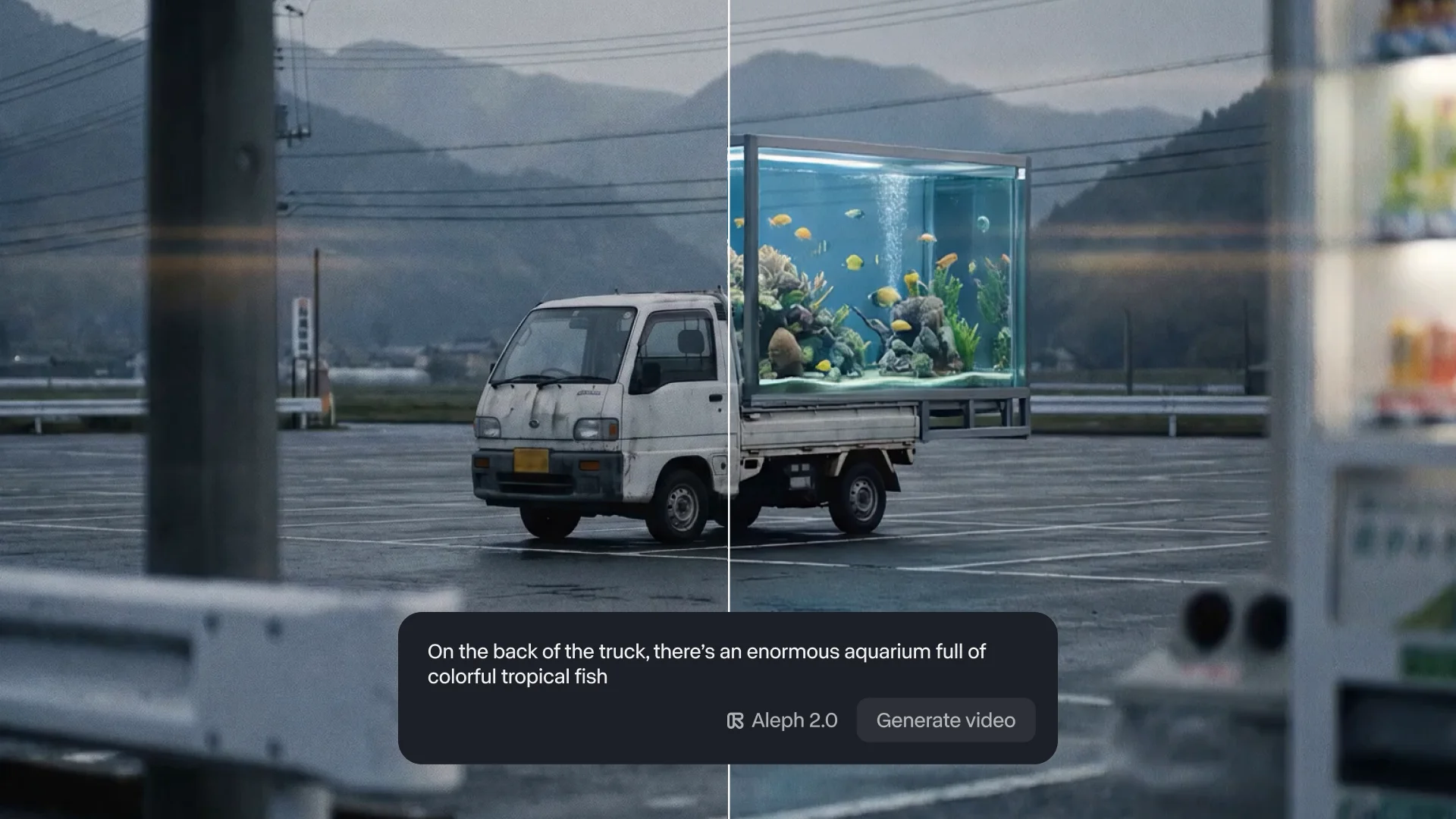
Runway's Aleph 2.0 editing model and Edit Studio launched May 21 and went live on the API June 2, supporting input clips from 2 to 30 seconds at 1080p, up to five timestamped keyframe images, and one-frame edits that propagate across the whole clip while preserving everything you didn't touch. It can also expand any video to a new aspect ratio without cropping — a direct fix for the vertical/horizontal reformatting grind.
Google folded new Veo 3.1 editing into Flow, headlined by "Insert" to add objects into any scene, with object removal and background reconstruction coming soon. Audio now extends across Ingredients to Video, Frames to Video, and Extend — so reference-driven characters, frame-to-frame transitions, and minute-plus continuous shots all carry native sound now.
ByteDance's Seedance 2.0, out since February, still sits at or near the top of the Artificial Analysis with-audio board (~1213 Elo) and keeps winning blind creator comparisons, especially for image-to-video and anatomical accuracy. As of June it's offering 100 free daily credits — roughly 10–20 clips a day at 1080p, no watermark, no card required — which makes it the cheapest serious model to actually test this weekend.
Heads up for distribution: TikTok now auto-detects synthetic media via C2PA Content Credentials and penalizes non-disclosure with reduced reach or removal, Meta auto-applies "Made with AI" labels across Instagram, Facebook and Threads from C2PA metadata, and YouTube's January synthetic-media disclosure rules require specific metadata tags. C2PA 2.3 (February) now records specific edit operations like "AI-generation," so the provenance trail is more granular than ever — plan your labeling per platform, because a label required on TikTok may not be required on Instagram.
Fresh 2026 payout data underscores where to point AI output: TikTok's Creator Rewards Program pays roughly $0.50–$1.00 per 1,000 qualified views (10k followers, 100k views/30 days to qualify), while YouTube Shorts RPM sits at a brutal $0.01–$0.15. Faceless and AI-assisted channels now make up about 38% of new creator monetization ventures, with production costs collapsed under $3 per video — so volume plus platform choice is the whole game.