xAI flipped Grok Imagine Video 1.5 from preview to general availability on June 16, landing at the top of the Image-to-Video Arena with an Elo around 1,330 — a +52 jump over the prior version. Pricing is the headline: $4.20 per minute at 720p versus $30/minute for Sora 2 Pro, plus a Fast mode that spits out a 6-second 720p clip in 25 seconds. For high-volume operators, that's a near-free image-to-video engine with synced audio in one pass.
Kuaishou dropped Kling 3.0 Turbo on June 17 alongside a 3.0 Omni upgrade, tuned for speed and cost with native audio baked in. List pricing is roughly $0.11/s at 720p and $0.14/s at 1080p, audio included. It's positioned exactly for our use case — high-volume social clips, multi-shot ad cuts, and character-led shorts that still need to look directed.
OpenAI killed the Sora consumer app back on April 26 citing compute economics, and the Sora 2 API is on a deprecated track that shuts down September 24. No successor video product announced. Translation for us: the biggest name in the space just vacated the consumer lane, and that audience and attention is up for grabs right now.
The Artificial Analysis Video Arena now has HappyHorse-1.0 (Alibaba), Seedance 2.0 (ByteDance), and Kling 3.0 (Kuaishou) locked in the top three for both text-to-video and image-to-video — no Western model in the top three on either board. HappyHorse claims 15B params and a 1080p clip in about 38 seconds on a single H100. If you're picking a backbone, the value-to-quality crown is Chinese right now.
The AI glass-fruit-cutting ASMR niche keeps converting — creators riding the wave have reported pulling 180,000+ TikTok followers in a single week, with example clips hitting 124.2K likes. The mechanic is the "brain-scratching" mismatch: a realistic object paired with an impossible sound, all generated in one Veo-style pass with matched audio. Low prompt complexity, high satisfaction-loop retention.
TikTok now auto-detects synthetic media via C2PA Content Credentials even when you don't self-disclose, and here's the trap — if a video goes viral and you forgot the AI label, you can't add it retroactively, putting it at risk of demonetization or removal. AI content is eligible for the Creativity Program if disclosed, but virtual influencers are barred from Creator Rewards entirely. Set the label at upload, every time.
YouTube renamed its "repetitious content" rule to "inauthentic content," and creators are reporting sudden demonetization, limited ads, and full YPP removal for mass-produced AI uploads. The nuance that matters: it's not killing AI content, it's killing low-effort AI content — channels adding real editorial contribution are still monetizing fine. Bank a defensible editorial layer on every channel now.
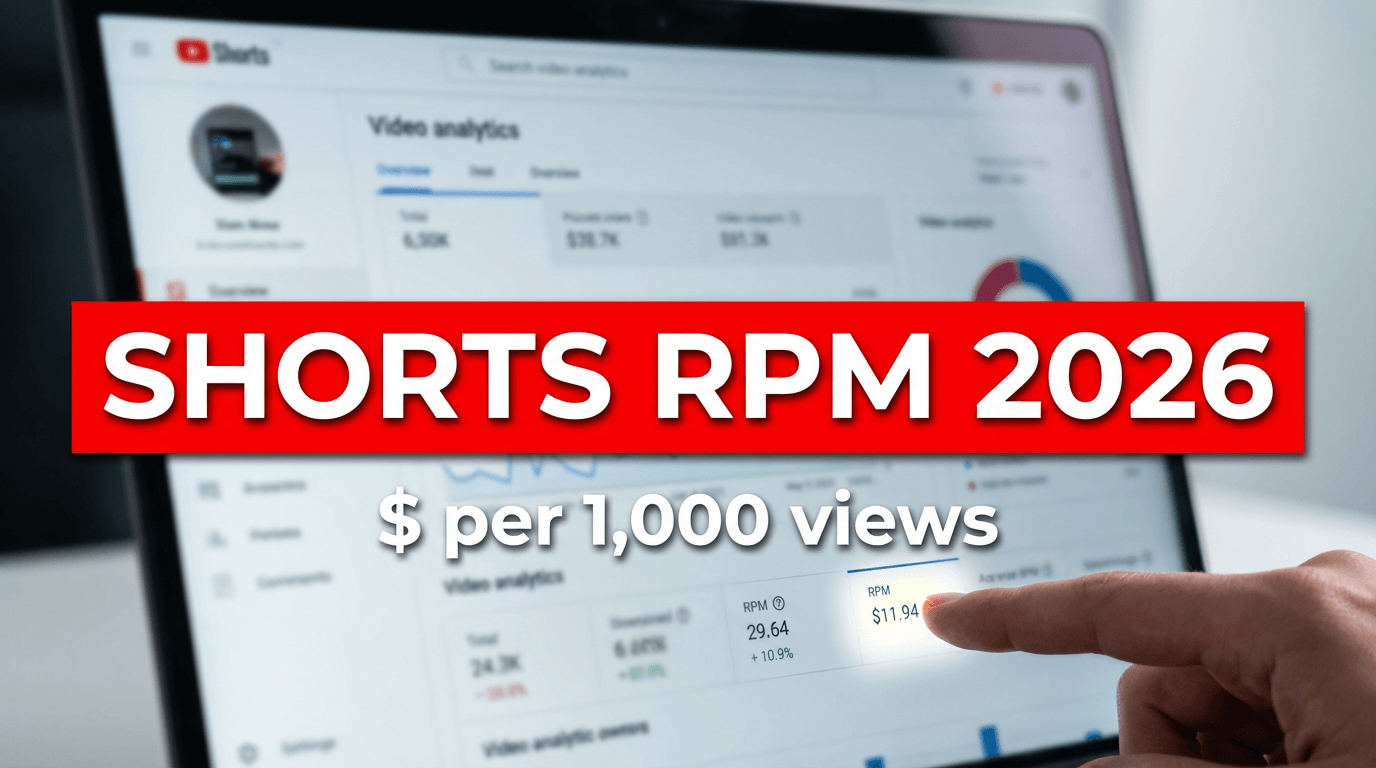
Fresh RPM data confirms Shorts still pay roughly $0.03–$0.10 per 1,000 views — 5 to 20x below long-form in the same niche. The winning structural play is Shorts-as-traffic-funnel into long-form, where RPM can be 10x–50x higher, and the AI/tech tutorial lane carries solid RPM because SaaS advertisers pay up. Don't monetize the Short — monetize what it feeds.