At Volcano Engine 2026 on June 23, ByteDance handed the current Seedance 2.0 a native 4K upgrade, lifting it past its old 720p/1080p ceiling, and ComfyUI shipped 4K support for the Seedance 2.0 partner node in v0.26.1 on June 24. ByteDance also unveiled Seedance 2.5, which generates 30-second native 4K clips from up to 50 reference inputs, currently in enterprise beta with a public launch targeted for early July. If you're already on Seedance, you can pull 4K today without changing models.
ComfyUI's June 24 release added 1080p support for Grok video generation and HappyHorse 1.1, hot on the heels of the June 23 v0.26.0 drop that brought LTX2 Context Windows for multimodal video-plus-audio, seven new nodes for Luma Ray 3.2, and the Krea2 image model with RAW and Turbo variants. The Jobs API also picked up cancel endpoints, so you can finally kill a runaway batch cleanly. This is the most consequential local-stack update in weeks for anyone building node graphs.
xAI's Grok Imagine Video 1.5, released June 17, jumped +52 Elo to claim the top spot on the Image-to-Video Arena, beating Sora 2, Veo 3.1, Seedance 2.0, and Kling in blind testing, with native synchronized audio generated in the same pass. The kicker is price: $4.20 per minute versus Sora 2's $30 per minute. The catch is a 720p output cap, so treat it as a high-volume idea engine rather than your finishing model.
YouTube is enforcing stricter monetization rules through 2026, with thousands of creators reporting sudden demonetization, limited ads, or full removal from the Partner Program. The line is sharp: auto-generated slideshows, TTS-over-stock-footage, and bulk near-duplicate uploads are out, while AI used with original scripts, real commentary, and human or heavily customized voiceovers stays monetizable. A 588K-subscriber Bible Stories channel reporting roughly $30K/month was demonetized channel-wide in a Q1 audit. Substantial human transformation isn't a suggestion anymore — it's the survival requirement.
Luma released Ray 3.2 on June 9, letting you place up to 16 keyframes inside a single clip for precise control over pacing and motion, with native HDR and optional EXR export for pro pipelines. For the first time, Ray is available as an API, so it can drop straight into custom tools and enterprise workflows. If your bottleneck is motion drift across a shot, keyframe authority is exactly the lever you've been missing.
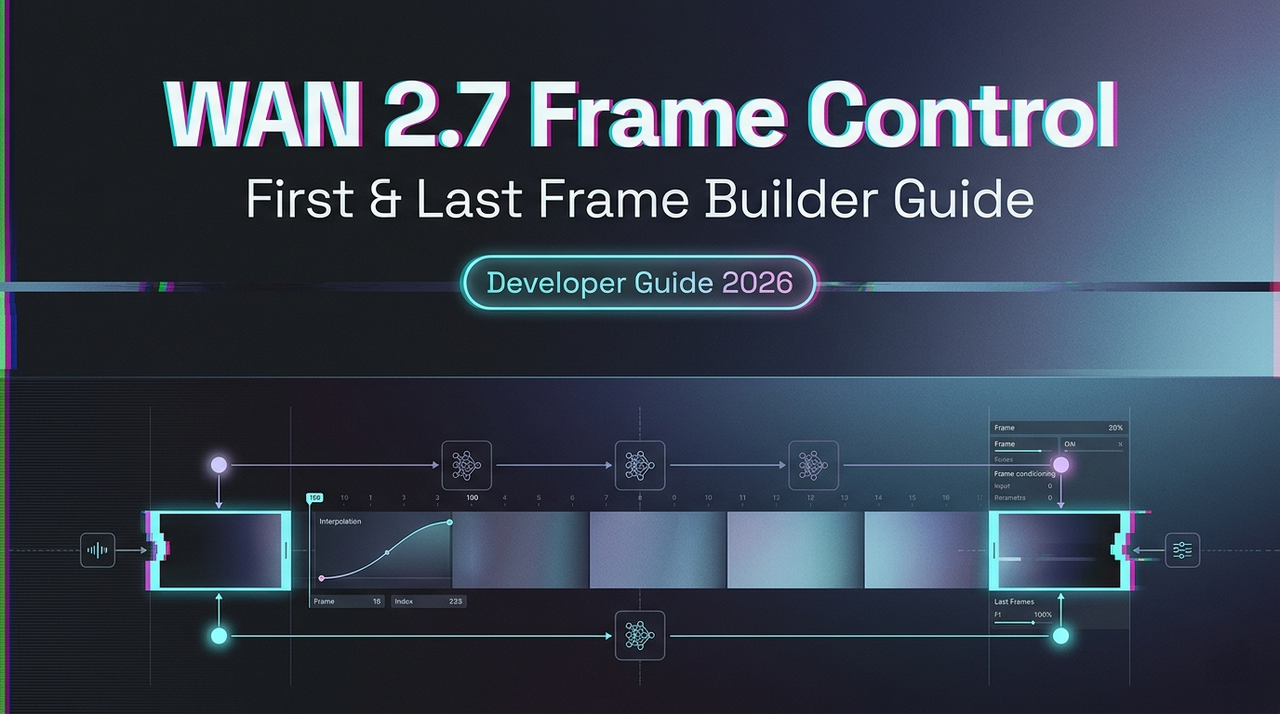
Wan 2.7's FLF2V approach treats your first and last frames as control conditions, injecting semantic features from both to hold subject identity and style consistent while inferring the motion path between them. The practical recipe creators are sharing: match light direction and depth of field across both frames, keep the end state physically reachable, and don't ask for a wild camera angle on the last frame unless your prompt explicitly includes the move. It's the cleanest way to get predictable open-source transitions without extra passes.
As of 2026, every AI-generated video on TikTok needs the built-in "AI-generated" label, and the platform actively scans uploads for C2PA provenance metadata while analyzing frames for AI artifacts like inconsistent lighting, bad hand geometry, and temporal facial glitches. Deepfakes of real people without labels are banned, and synthetic media of real private individuals is prohibited even with a label. Strip your metadata at your own risk — the detection net is wider than the disclosure toggle.
Fresh 2026 Creator Program data shows Reels now drive about 35% of total creator earnings on the platform, up from 22% in 2024, yet direct Reels bonuses are less than 10% of income for most creators. Platform payout rates sit at just $0.01–$0.05 per 1,000 views and ad revenue share is invite-only at 55%, while brand deals pay $150–$800 per Reel — 100 to 400 times more than platform bonuses. If you're chasing Reels views as a revenue strategy, the math says pivot to sponsorships and products.
The highest-earning faceless niches right now are personal finance at $10–$15 RPM, education at $9–$14, true crime at $8–$13, and animated storytelling at $9–$13, with finance and tech topics commanding $15–$40 per 1,000 views. Well-executed channels still take 6–12 months to hit the monetization threshold, with early payouts of $50–$500/month scaling toward $500–$5,000 by months 12–18. The winners pair high-RPM niches with the human-transformation standard YouTube is now enforcing.